Decoding Stop-Loss Orders: Your Shield in the Trading Arena
Hey there, fellow traders! Ever felt that gut-wrenching feeling when a trade goes south faster than a politician's promise? We've all been there. It's like watching your carefully constructed sandcastle get swept away by an unexpected wave. But what if I told you there's a way to build a seawall, a protective barrier against those sudden market tsunamis? That's where stop-loss orders come in – your unsung heroes in the volatile world of trading.
Let's face it, the market doesn't care about your feelings. It's a ruthless beast, driven by algorithms, news events, and the collective emotions of millions of participants. Trying to predict its every move is like trying to herd cats while blindfolded. You might get lucky occasionally, but more often than not, you'll end up with scratches and a headache. So, instead of trying to outsmart the market, why not focus on managing your risk? Think of it as playing defense in a high-stakes game. You don't need to win every play; you just need to avoid getting completely wiped out.
Now, you might be thinking, "Okay, stop-loss orders sound great in theory, but are they really that effective?" Well, consider this: Imagine you're driving a car and suddenly lose control. Do you slam on the brakes and hope for the best? Or do you steer into a safe direction, minimizing the potential damage? A stop-loss order is like that steering wheel – it allows you to react quickly and decisively when things go wrong, limiting your losses and preserving your capital for future opportunities. It's not a guaranteed win, but it's a heck of a lot better than crashing headfirst into a brick wall.
But here's the thing: Stop-loss orders aren't a magical cure-all. They're just one tool in your trading arsenal, and like any tool, they need to be used correctly. Setting your stop-loss too tight can get you prematurely knocked out of a profitable trade, while setting it too wide can expose you to unnecessary risk. It's a delicate balancing act, requiring careful consideration of market conditions, your trading strategy, and your own risk tolerance.
Think of it like baking a cake. You can have the best recipe in the world, but if you don't measure the ingredients correctly or bake it at the right temperature, you'll end up with a soggy mess. Similarly, a poorly placed stop-loss order can be more harmful than no stop-loss at all.
In today's fast-paced market, where news travels at the speed of light and algorithms can trigger flash crashes in a matter of seconds, having a well-defined risk management strategy is more critical than ever. Gone are the days of "set it and forget it" investing. To stay ahead of the game, you need to be proactive, adaptable, and always learning. And that's exactly what this article is designed to help you do.
So, are you ready to unlock the secrets of stop-loss orders and transform yourself from a passive observer into a proactive risk manager? Stick with me, and we'll explore the ins and outs of this powerful tool, from the basic concepts to advanced strategies. By the end of this article, you'll have a solid understanding of how to use stop-loss orders to protect your capital, minimize your losses, and ultimately, become a more successful trader. Let's dive in!
Understanding the Basics of Stop-Loss Orders
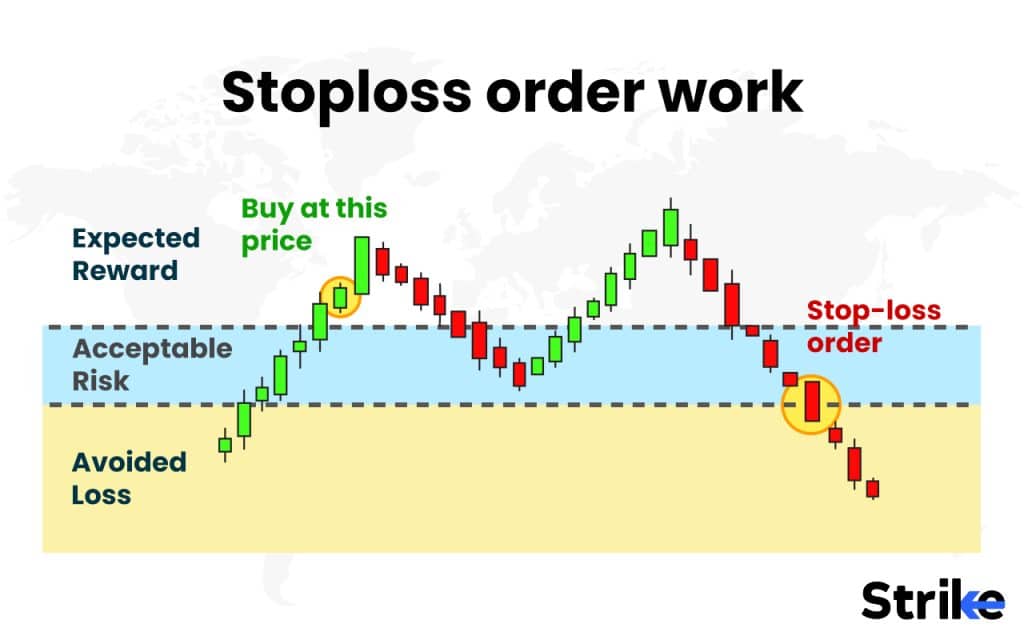
Okay, friends, let's break down what a stop-loss order actually is. Simply put, it's an order you place with your broker to sell a security (like a stock, ETF, or cryptocurrency) when its price reaches a specific level – the "stop price." This level is typically set below the price you bought the security at (for a long position) to limit your potential losses if the price drops. Conversely, for a short position, the stop-loss would be placed above the price you shorted at.
Think of it as an automatic parachute. You hope you never have to use it, but it's there just in case things go wrong. Instead of constantly watching the market and manually executing a sell order when the price starts to decline, the stop-loss order does it for you automatically. This can be a huge time-saver and can also help you avoid emotional decision-making, which can often lead to costly mistakes.
Here's a simple example: Let's say you buy a stock at $50 per share and you're willing to risk losing 10% of your investment. You could place a stop-loss order at $45. If the stock price falls to $45, your broker will automatically execute a sell order, limiting your loss to $5 per share (plus any commissions and fees).
Now, let's delve into the different types of stop-loss orders:
• Stop-Market Orders: This is the most basic type. Once the stop price is triggered, it becomes a market order, meaning it's executed at the best available price in the market. The downside is that in volatile markets, you might get filled at a price significantly lower than your stop price (this is known as slippage).
• Stop-Limit Orders: This type adds an extra layer of control. Once the stop price is triggered, it becomes a limit order, meaning it will only be executed at your specified limit price or better. This can help you avoid slippage, but the downside is that your order might not be filled at all if the price moves too quickly.
• Trailing Stop Orders: These are dynamic stop-loss orders that adjust automatically as the price of the security moves in your favor. For example, you could set a trailing stop at 10% below the current market price. If the price rises, your stop price will also rise, locking in profits. If the price falls by 10%, your order will be triggered. This is a great way to protect your gains while still allowing your profits to run.
Okay, so why are stop-loss orders so important? Let's look at some key benefits:
• Protection Against Significant Losses: This is the most obvious benefit. Stop-loss orders help you limit your downside risk and prevent a single bad trade from wiping out your entire account.
• Emotional Discipline: Trading can be an emotional rollercoaster, and it's easy to get caught up in the hype or panic when the market moves against you. Stop-loss orders help you stay disciplined and stick to your trading plan, even when your emotions are telling you otherwise.
• Time Savings: Constantly monitoring the market can be exhausting and time-consuming. Stop-loss orders automate the process of selling a security when it reaches a certain level, freeing up your time to focus on other things.
• Flexibility: Stop-loss orders can be used with a variety of trading strategies, from day trading to long-term investing. They can also be adjusted to suit your individual risk tolerance and market conditions.
Crafting Your Stop-Loss Strategy: A Practical Guide
Alright, friends, now that we've covered the basics, let's talk about how to actually use stop-loss orders effectively. This is where things get a little more nuanced, as there's no one-size-fits-all approach. The best strategy for you will depend on your trading style, risk tolerance, and the specific characteristics of the securities you're trading.
First, consider your risk tolerance. Are you a conservative investor who's willing to accept lower returns in exchange for lower risk? Or are you a more aggressive trader who's comfortable with higher risk in pursuit of higher potential rewards? Your risk tolerance will influence the size of your stop-loss orders. If you're risk-averse, you'll likely want to set tighter stop-loss orders to minimize your potential losses. If you're more risk-tolerant, you might be willing to set wider stop-loss orders to give your trades more room to breathe.
Next, consider the volatility of the security you're trading. Volatile stocks and cryptocurrencies tend to experience larger price swings, so you'll need to set wider stop-loss orders to avoid getting prematurely knocked out of a trade. Less volatile securities, on the other hand, might allow you to set tighter stop-loss orders.
Here are some practical approaches to consider:
• Percentage-Based Stop-Loss: This is a simple and straightforward approach. You set your stop-loss order at a fixed percentage below your purchase price. For example, you might set a stop-loss at 5% or 10% below your entry point. This approach is easy to implement and can be used with a variety of securities.
• Support and Resistance Levels: Technical analysis involves identifying key support and resistance levels on a price chart. Support levels are price levels where a security has historically found buying support, while resistance levels are price levels where a security has historically faced selling pressure. You can use these levels to set your stop-loss orders. For example, you might place your stop-loss order just below a key support level. The idea is that if the price breaks below the support level, it's a sign that the downtrend is likely to continue.
• Average True Range (ATR): The ATR is a technical indicator that measures the average size of a security's price swings over a given period. You can use the ATR to set your stop-loss orders. For example, you might set your stop-loss order at two or three times the ATR. This approach takes into account the volatility of the security and adjusts your stop-loss order accordingly.
• Time-Based Stop-Loss: Instead of using a price level, you use a timeframe. If a trade hasn't moved in your favor after a certain amount of time, you exit the position. This is useful for strategies that rely on quick price movements.
• The "2% Rule": A popular risk management guideline suggests never risking more than 2% of your total trading capital on any single trade. This helps to protect your overall portfolio from significant losses.
Advanced Stop-Loss Strategies and Considerations
Okay, my savvy traders, let's move beyond the basics and into some more advanced techniques. These strategies require a deeper understanding of market dynamics and risk management, but they can significantly improve your trading results.
• Using Options to Hedge: For experienced traders, options can be a powerful tool for hedging your positions. For example, if you own a stock, you can buy a put option to protect against downside risk. The put option gives you the right, but not the obligation, to sell the stock at a specific price (the strike price) before a specific date (the expiration date). If the stock price falls below the strike price, the put option will increase in value, offsetting some or all of your losses on the stock. This can be a more cost-effective way to protect your downside risk than simply using a stop-loss order.
• Scaling In and Out of Positions: This involves gradually building or reducing your position size as the price moves in your favor or against you. For example, if you're bullish on a stock, you might start with a small position and then add to it as the price rises. Conversely, if the price starts to fall, you might gradually reduce your position size. This allows you to manage your risk more effectively and potentially increase your profits.
• Incorporating Fundamental Analysis: While technical analysis focuses on price charts and indicators, fundamental analysis involves evaluating the underlying financial health of a company or asset. This can include analyzing financial statements, industry trends, and economic conditions. Incorporating fundamental analysis into your stop-loss strategy can help you make more informed decisions about when to enter and exit trades.
• The Importance of Backtesting: Before implementing any stop-loss strategy, it's crucial to backtest it using historical data. This involves simulating how the strategy would have performed in the past. Backtesting can help you identify potential weaknesses in your strategy and optimize your parameters for different market conditions.
• Beware of "Stop Hunting": Stop hunting is a tactic used by some market participants to trigger stop-loss orders and profit from the resulting price movement. This typically involves temporarily driving the price of a security down to trigger stop-loss orders, and then buying the security back at a lower price. While stop hunting is difficult to prove, it's important to be aware of the possibility and to avoid placing your stop-loss orders at obvious levels where they might be targeted.
Remember to adjust your stop-loss orders as the market evolves. What worked well last year might not work as well this year. Stay informed, be adaptable, and never stop learning. The market is constantly changing, and you need to be prepared to change with it.
Common Pitfalls to Avoid
Alright, friends, let's talk about some common mistakes people make when using stop-loss orders. Avoiding these pitfalls can save you a lot of money and frustration.
• Setting Stop-Losses Too Tight: This is one of the most common mistakes. If you set your stop-loss order too close to your entry price, you're likely to get prematurely knocked out of a trade due to normal market fluctuations. This is especially true for volatile securities.
• Ignoring Market Volatility: As we discussed earlier, market volatility plays a crucial role in determining the appropriate size of your stop-loss orders. Ignoring volatility can lead to both setting stop-losses too tight and too wide.
• Not Adjusting Stop-Losses: Once you've placed a stop-loss order, it's important to monitor your trade and adjust your stop-loss as the price moves in your favor. Failing to do so can result in giving back profits or exposing yourself to unnecessary risk.
• Overcomplicating Things: While advanced stop-loss strategies can be effective, it's important to avoid overcomplicating things. Keep your strategy simple and easy to understand. The more complex your strategy, the more difficult it will be to implement and manage.
• Relying Solely on Stop-Loss Orders: Stop-loss orders are a valuable tool, but they shouldn't be the only tool in your risk management arsenal. Diversification, position sizing, and fundamental analysis are all important components of a comprehensive risk management strategy.
Stop-Loss Orders in Crypto Trading: A Different Beast
Alright, crypto enthusiasts, let's talk about stop-loss orders in the wild world of cryptocurrency trading. While the basic principles are the same, there are some unique challenges and considerations to keep in mind.
First and foremost, cryptocurrency markets are notoriously volatile. Prices can swing wildly in a matter of minutes, and flash crashes are not uncommon. This means that you need to be extra careful when setting your stop-loss orders in the crypto market. You'll likely need to set wider stop-loss orders than you would for more traditional assets.
Another important consideration is liquidity. Some cryptocurrencies have very low trading volumes, which can make it difficult to get your stop-loss orders filled at the desired price. This is especially true during periods of high volatility.
Slippage is also a major concern in the crypto market. Due to the high volatility and low liquidity, you might get filled at a price significantly lower than your stop price. This can be particularly problematic with stop-market orders. Consider using stop-limit orders to mitigate the risk of slippage, but be aware that your order might not be filled at all if the price moves too quickly.
Here are some additional tips for using stop-loss orders in crypto trading:
• Use trailing stop orders to protect your profits as the price rises. This is especially important in the crypto market, where prices can rise rapidly and then quickly reverse.
• Be aware of fakeouts. In the crypto market, it's not uncommon for the price to briefly dip below a key support level or rise above a key resistance level before reversing direction. This can trigger your stop-loss orders and cause you to exit a trade prematurely.
• Consider using multiple stop-loss orders. Instead of placing a single stop-loss order, you could place multiple stop-loss orders at different price levels. This can help you to manage your risk more effectively and avoid getting completely wiped out by a single bad trade.
• Don't rely solely on technical analysis. While technical analysis can be helpful in the crypto market, it's important to also consider fundamental factors, such as news events, regulatory developments, and adoption rates.
By understanding these unique challenges and considerations, you can use stop-loss orders effectively in the crypto market and protect your capital from the inherent volatility.
Stop-Loss Order Examples in Trading
Let's go through a few examples.
• Stock Trading Example:
Scenario: You buy 100 shares of a tech stock at $100 per share because you believe the company is poised for growth.
Risk Tolerance: You are willing to risk 5% of your investment.
Stop-Loss Placement: You set a stop-loss order at $95 per share (5% below your purchase price).
Outcome: If the stock price drops to $95, your stop-loss order is triggered, and your shares are automatically sold, limiting your loss to $5 per share, or $500 total (excluding fees).
• Cryptocurrency Trading Example:
Scenario: You purchase 1 Bitcoin (BTC) at $50,000, expecting a short-term rally.
Volatility Consideration: Given the high volatility of Bitcoin, you decide to use a wider stop-loss.
Stop-Loss Placement: You set a trailing stop-loss order at 10% below the current price.
Outcome: If the price rises to $55,000, your stop-loss automatically adjusts to $49,500 (10% below $55,000). If the price then drops to $49,500, your BTC is sold, securing some profit while limiting potential losses.
• Forex Trading Example:
Scenario: You enter a long position on EUR/USD at 1.1000, anticipating positive economic news from Europe.
Technical Analysis: You identify a support level at 1.0950.
Stop-Loss Placement: You place your stop-loss order just below the support level at 1.0940.
Outcome: If the EUR/USD exchange rate falls to 1.0940, your stop-loss order is triggered, protecting you from further losses if the currency pair continues to decline.
Stop-Loss FAQs
Here are some questions and answers to cement your understanding:
• Q: What happens if the price gaps down below my stop-loss order?
A: In this scenario, your stop-loss order becomes a market order, and it will be executed at the best available price. However, due to slippage, the execution price might be significantly lower than your stop price.
• Q: Can I change my stop-loss order after I place it?
A: Yes, you can usually modify or cancel your stop-loss order at any time before it's triggered. However, keep in mind that modifying your stop-loss order can change your risk exposure.
• Q: Are stop-loss orders guaranteed to protect me from losses?
A: No, stop-loss orders are not guaranteed to protect you from losses. In volatile markets or during periods of low liquidity, your order might not be filled at the desired price, or it might not be filled at all.
• Q: Should I use stop-loss orders for all of my trades?
A: While stop-loss orders can be a valuable tool, they're not always necessary or appropriate for every trade. The decision of whether or not to use a stop-loss order will depend on your trading strategy, risk tolerance, and the specific characteristics of the security you're trading.
Congratulations, you've reached the end of this comprehensive guide to stop-loss orders! We've covered everything from the basic concepts to advanced strategies, and hopefully, you now have a solid understanding of how to use this powerful tool to protect your capital and minimize your losses.
But remember, knowledge is only power if you put it into action. So, take what you've learned here and start experimenting with stop-loss orders in your own trading. Backtest different strategies, adjust your parameters, and find what works best for you.
The market is a dynamic and ever-changing environment, and there's always something new to learn. So, stay curious, stay informed, and never stop improving your trading skills. Your next step is to try out a demo account, paper trade, and then use small amounts of real money. See how you can now trade more effectively.
Now go forth and trade with confidence, knowing that you have the tools and knowledge to manage your risk effectively. Remember, success in trading isn't about winning every trade; it's about managing your losses and preserving your capital for the long run.
So, what are you waiting for? Start implementing stop-loss orders in your trading today and take control of your financial destiny! What strategies will you try first?
