Essential Swing Trading Crypto Insights for Profitable Short-Term Strategies
If you're looking to capitalize on the fast-paced nature of the cryptocurrency market, swing trading could be a powerful tool in your arsenal. Unlike long-term investing, which requires patience and a belief in the future value of assets, swing trading focuses on capturing short- to medium-term price movements. This approach allows traders to take advantage of market volatility without needing to monitor their positions constantly. In this article, we’ll explore the fundamentals of swing trading in crypto, key strategies, and practical insights to help you build a successful trading plan.
Understanding What Swing Trading Is
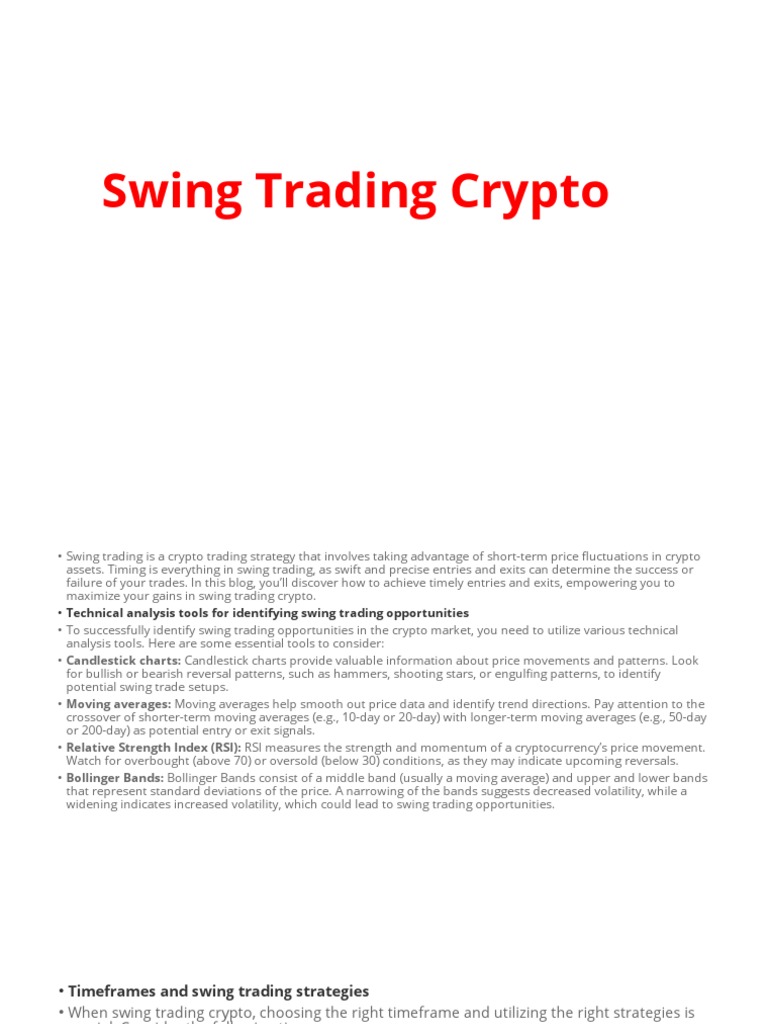
Swing trading is a strategy that aims to profit from price swings in the market. Traders look for opportunities to buy low and sell high within a specific time frame, typically ranging from a few days to several weeks. The goal is to ride the momentum of a trend while minimizing exposure to overnight or weekend risks.
In the context of crypto, swing trading involves analyzing technical indicators, chart patterns, and market sentiment to identify potential entry and exit points. Unlike day trading, which requires constant monitoring, swing traders can hold positions for multiple days, making it a more flexible option for those with busy schedules.
One of the key principles of swing trading is identifying support and resistance levels. These are price levels where an asset has historically found buying or selling pressure. By understanding these levels, traders can make informed decisions about when to enter or exit a trade.
Key Strategies for Successful Swing Trading in Crypto
To succeed in swing trading, it's essential to have a clear strategy. Here are some of the most effective techniques used by experienced traders:
-
Trend Pullbacks: This strategy involves entering a trade during a temporary pullback in a strong trend. For example, if a cryptocurrency is in an uptrend but experiences a brief decline, a trader might see this as an opportunity to buy at a lower price before the trend resumes.
-
Support and Resistance Trading: Identifying key support and resistance levels can help traders determine optimal entry and exit points. When a price approaches a support level, it may bounce back, creating a buying opportunity. Conversely, if a price hits a resistance level, it might reverse, signaling a potential sell.
-
Breakout Trading: This strategy targets assets that are consolidating within a range. When the price breaks above resistance or below support, it often signals a new trend. Traders can enter a position once the breakout is confirmed.
-
Fibonacci Retracement: This technique uses the Fibonacci sequence to identify potential reversal points. Common levels include 23.6%, 38.2%, 61.8%, and 161.8%. These levels can be used in conjunction with other indicators to confirm trade setups.
-
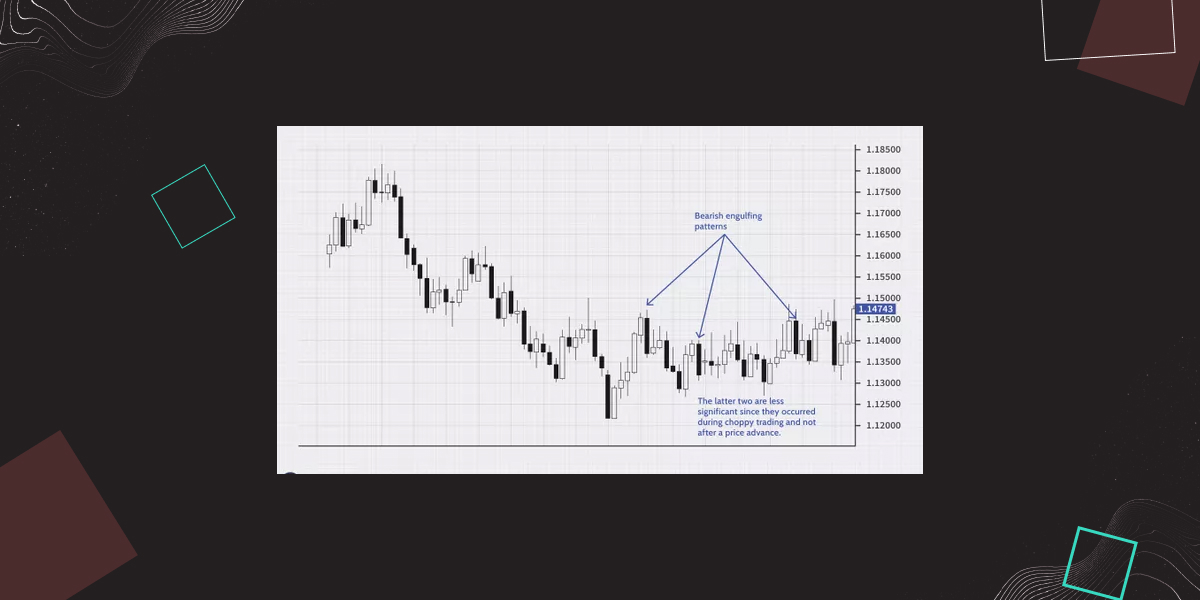
Chart Patterns: Recognizing chart patterns such as head-and-shoulders, double tops, and flags can provide valuable insights into potential price movements. These patterns often signal reversals or continuations of trends.
Practical Tips for Effective Swing Trading

While having a solid strategy is crucial, there are several additional tips that can enhance your chances of success:
-
Use Technical Indicators: Tools like the Relative Strength Index (RSI), Moving Average Convergence Divergence (MACD), and moving averages can help confirm trade setups and filter out noise.
-
Set Clear Entry and Exit Points: Define the exact prices at which you will enter and exit a trade. This helps manage risk and ensures you don't hold onto losing positions for too long.
-
Implement Risk Management: Always use stop-loss orders to limit potential losses. Determine the maximum amount you're willing to risk on each trade and stick to it.
-
Stay Updated on Market News: While swing trading relies heavily on technical analysis, staying informed about market news and events can provide additional context and help you make better decisions.
-
Practice Discipline: Emotions can cloud judgment, leading to impulsive decisions. Stick to your strategy and avoid chasing losses or overtrading.
The Risks Involved in Swing Trading
While swing trading offers the potential for quick profits, it also comes with its share of risks. One of the biggest challenges is timing. Even the most well-researched trades can go wrong if the market moves against you. Additionally, swing traders are exposed to overnight and weekend risks, which can lead to significant losses if the market gaps down or up.
Another risk is emotional trading. It's easy to get caught up in the excitement of a winning trade and overextend yourself, or to panic and cut a trade short due to fear of further losses. Developing a disciplined mindset and sticking to your strategy is essential for long-term success.
Comparing Swing Trading to Spot Investing
When deciding between swing trading and spot investing, it's important to consider your goals, time commitment, and risk tolerance. Spot investing involves buying and holding cryptocurrencies for the long term, with the hope that their value will increase over time. This approach is ideal for those who prefer a more passive strategy and are comfortable with the idea of holding through market fluctuations.
On the other hand, swing trading requires active participation and a deeper understanding of technical analysis. It's suited for traders who enjoy analyzing charts, following market trends, and making timely decisions. However, it demands more time and effort, as well as the ability to handle the stress of frequent trading.
Conclusion
Swing trading in crypto can be a rewarding strategy for those who are willing to put in the time and effort to learn and practice. By understanding key concepts like support and resistance, using technical indicators effectively, and managing risk properly, you can increase your chances of success. Remember, no strategy is foolproof, and consistent learning and discipline are essential for long-term profitability.
Whether you choose to focus on swing trading, spot investing, or a combination of both, the most important thing is to find a strategy that aligns with your goals and lifestyle. With the right approach, you can navigate the dynamic world of crypto trading and achieve your financial objectives.
