How to Trade Bitcoin Using Charts: A Beginner's Guide
Trading Bitcoin can be an exciting and potentially profitable endeavor, especially when you understand how to use charts effectively. Whether you're a complete novice or have some experience with trading, learning how to interpret Bitcoin price charts is essential for making informed decisions in the cryptocurrency market. In this guide, we’ll walk you through the basics of trading Bitcoin using charts, from understanding key chart patterns to developing a solid trading strategy.

Understanding Bitcoin Price Charts

Before diving into specific strategies, it's important to understand what Bitcoin price charts represent. A Bitcoin chart displays the historical price movements of the cryptocurrency over a given period, allowing traders to identify trends, support and resistance levels, and potential entry and exit points.
There are several types of Bitcoin charts that traders commonly use:
- Candlestick Charts: These charts show the open, high, low, and close prices for a specific time period, typically 1-hour, 4-hour, daily, or weekly intervals. Candlestick patterns can help traders predict future price movements.
- Line Charts: These are the simplest form of charts, showing only the closing prices over time. They’re useful for identifying long-term trends.
- Bar Charts: Similar to candlestick charts, bar charts display the same data but in a different format, with each bar representing the high, low, open, and close prices.
For beginners, starting with candlestick charts is often the best approach, as they provide more detailed information about price action.
Key Technical Indicators for Bitcoin Trading

Technical indicators are tools that help traders analyze price data and make predictions about future movements. Here are some of the most commonly used indicators for Bitcoin trading:
1. Moving Averages
Moving averages smooth out price data to help identify trends. The two most popular moving averages are: - Simple Moving Average (SMA): Calculates the average price over a specified period. - Exponential Moving Average (EMA): Gives more weight to recent prices, making it more responsive to new information.
Traders often look for crossovers between short-term and long-term moving averages as signals for potential buy or sell opportunities.
2. Relative Strength Index (RSI)
The RSI measures the speed and change of price movements, indicating whether a cryptocurrency is overbought or oversold. An RSI above 70 suggests that Bitcoin may be overbought, while an RSI below 30 indicates it may be oversold.
3. Bollinger Bands
Bollinger Bands consist of a moving average and two standard deviation lines that show the volatility of a cryptocurrency. When the price moves outside the bands, it can signal a potential reversal or continuation of a trend.
4. MACD (Moving Average Convergence Divergence)
MACD is a trend-following momentum indicator that shows the relationship between two moving averages. It consists of a line (the difference between two EMAs) and a signal line. Crossovers between these lines can indicate potential buy or sell signals.
Identifying Chart Patterns
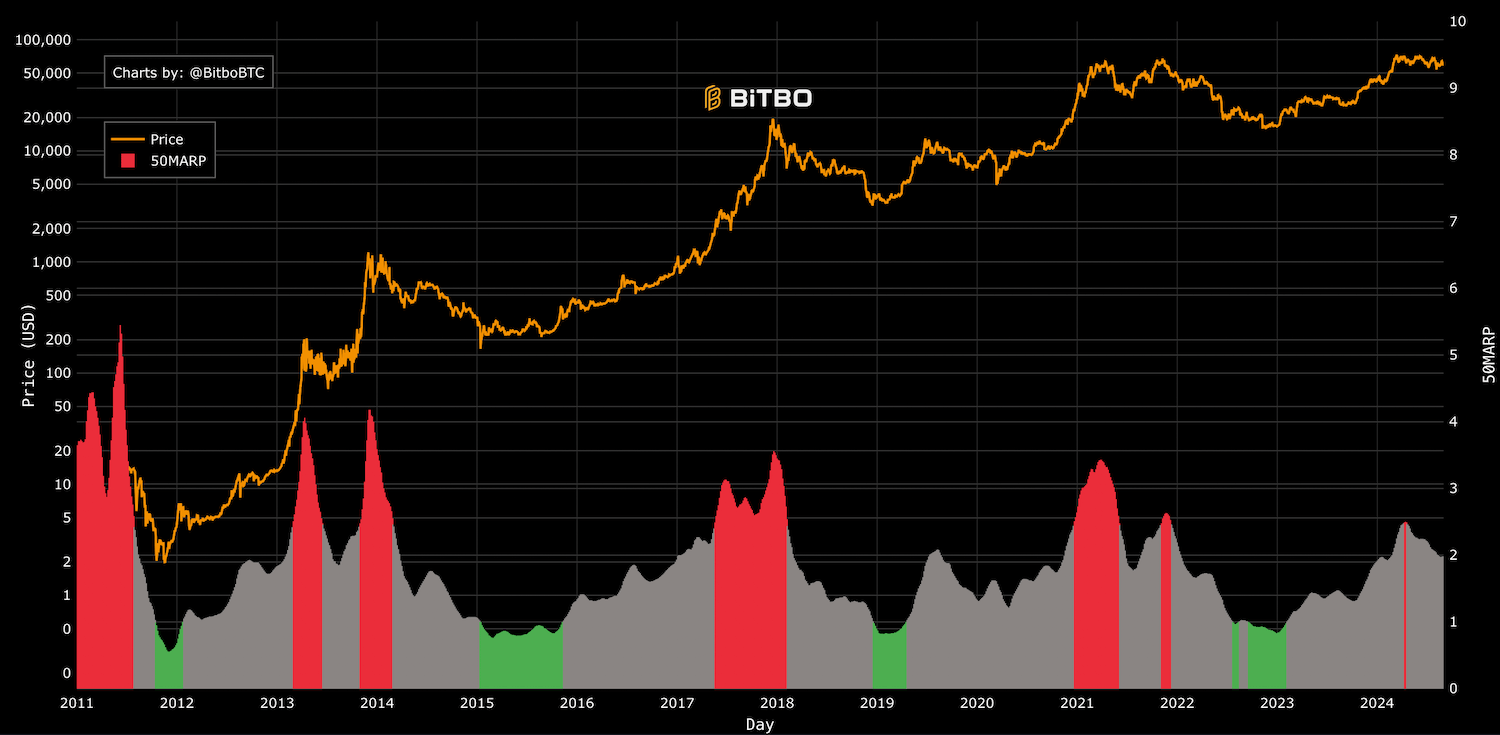
Bitcoin price charts often exhibit recognizable patterns that can help traders anticipate future price movements. Some common chart patterns include:
1. Head and Shoulders
This pattern is considered a reversal pattern, signaling a potential shift from an uptrend to a downtrend. It consists of three peaks, with the middle peak (the head) being higher than the other two (the shoulders).
2. Double Top/Double Bottom
A double top occurs when the price reaches a certain level twice before reversing, indicating a potential downtrend. Conversely, a double bottom occurs when the price hits a support level twice before reversing, suggesting a potential uptrend.
3. Triangle Patterns
Triangles are consolidation patterns that occur when the price moves within a narrowing range. There are three main types of triangles: - Ascending Triangle: Indicates a potential breakout to the upside. - Descending Triangle: Suggests a potential breakdown to the downside. - Symmetrical Triangle: Can go either way, depending on the direction of the breakout.
4. Flags and Pennants
Flags and pennants are short-term continuation patterns that form after a sharp price movement. They suggest that the trend will continue once the pattern completes.
Developing a Trading Strategy

Once you understand how to read Bitcoin charts, the next step is to develop a trading strategy that aligns with your goals and risk tolerance. Here are a few common approaches:
1. Trend Trading
Trend trading involves identifying and following established trends in the market. Traders look for assets that are trending upward or downward and enter positions in the direction of the trend.
2. Range Trading
Range trading is suitable for markets that are consolidating within a defined range. Traders buy at the lower end of the range and sell at the upper end, profiting from the oscillation between support and resistance levels.
3. Breakout Trading
Breakout trading involves entering a trade when the price breaks out of a consolidation pattern, such as a triangle or a flag. This strategy relies on the assumption that the breakout will continue in the same direction.
4. Scalping
Scalping is a short-term strategy where traders aim to make small profits on multiple trades throughout the day. This requires quick decision-making and tight stop-loss orders.
Risk Management in Bitcoin Trading
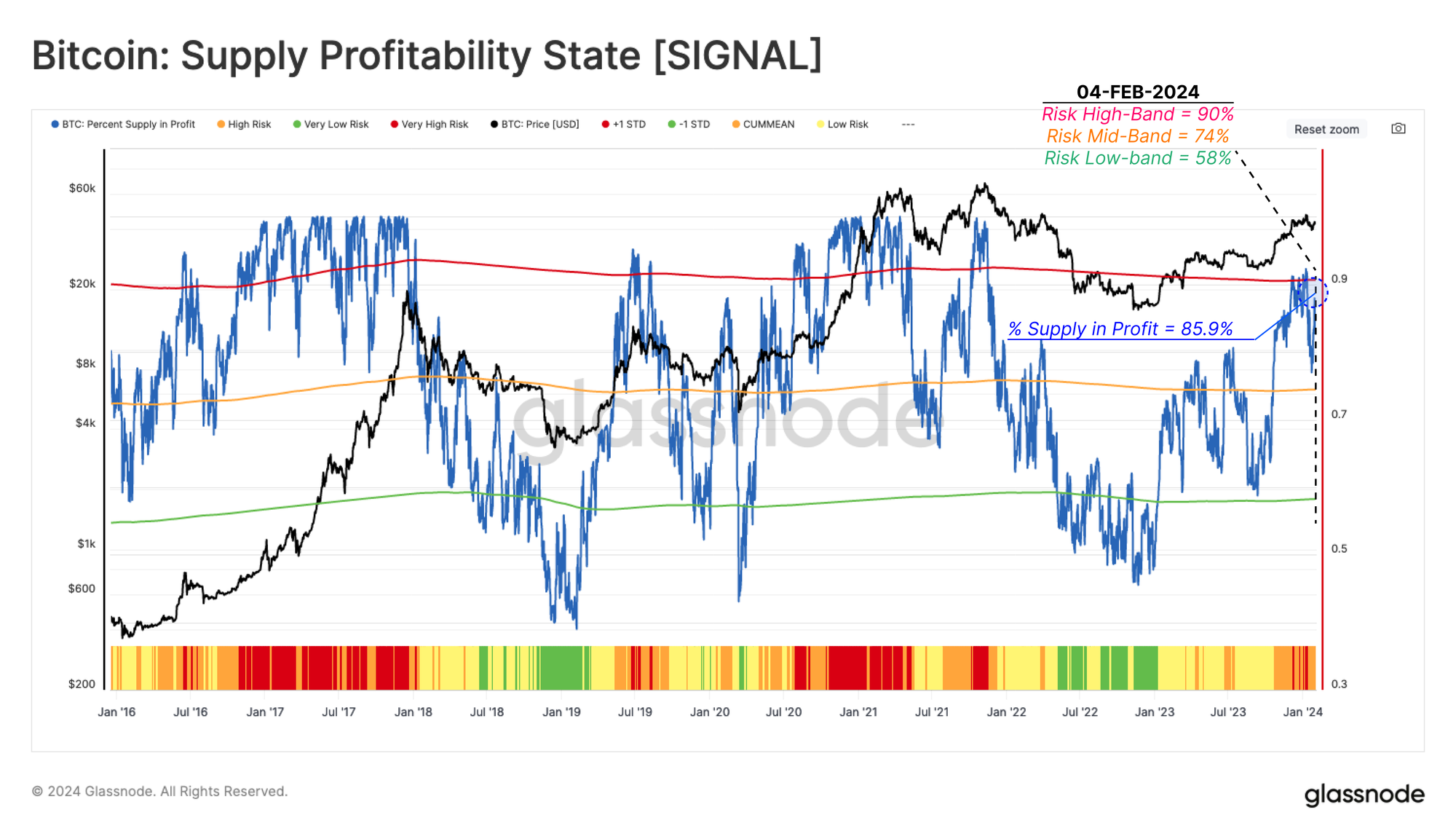
Effective risk management is crucial for long-term success in Bitcoin trading. Here are some key principles to keep in mind:
1. Set Stop-Loss Orders
Stop-loss orders automatically close a trade if the price moves against you by a predetermined amount. This helps limit potential losses and protect your capital.
2. Use Position Sizing
Position sizing involves determining how much of your capital to allocate to each trade. A common rule of thumb is to risk no more than 1-2% of your account on a single trade.
3. Diversify Your Portfolio
Diversification reduces the impact of any single trade on your overall portfolio. Consider spreading your investments across different cryptocurrencies and asset classes.
4. Stay Updated on Market News
Bitcoin is highly sensitive to news events, such as regulatory changes, technological advancements, and macroeconomic factors. Staying informed can help you make better-informed trading decisions.
Conclusion: Mastering Bitcoin Trading with Charts
Trading Bitcoin using charts is a powerful way to gain insights into market behavior and make informed decisions. By understanding key technical indicators, identifying chart patterns, and developing a solid trading strategy, you can increase your chances of success in the volatile world of cryptocurrency.
Remember, successful trading requires discipline, patience, and continuous learning. As you gain experience, you’ll become more confident in your ability to navigate the markets and achieve your financial goals. With the right tools and mindset, you can turn your Bitcoin trading journey into a rewarding and profitable endeavor.
