Top Altcoins with Real-World Utility in 2025
In the ever-evolving world of cryptocurrency, the focus is shifting from speculative trading to real-world utility. As investors and institutions seek more than just price fluctuations, altcoins that offer tangible solutions are gaining traction. This article explores the top altcoins with real-world utility in 2025, highlighting their unique use cases, growing ecosystems, and potential for long-term value.

Why Real-World Utility Matters

The cryptocurrency market has seen a significant shift in recent years. While Bitcoin remains the king of digital assets, the rise of altcoins with practical applications is reshaping the landscape. These coins aren't just about speculation; they're about solving real problems in finance, technology, and everyday life. From cross-border payments to decentralized storage, these altcoins are proving that blockchain can be more than just a buzzword.
Ethereum (ETH)
Ethereum (ETH) is one of the most well-known altcoins with real-world utility. It's not just a cryptocurrency but a platform for building decentralized applications (dApps) and smart contracts. Ethereum's ecosystem includes a vast array of DeFi projects, NFT marketplaces, and enterprise solutions, making it a cornerstone of the blockchain economy.
Real-World Use Case: Smart contracts, DeFi, NFTs, dApps
Adoption: Widely used by developers, enterprises, and blockchain platforms
Key Advantage: Large ecosystem and developer support
Ethereum's transition to Proof-of-Stake has improved its scalability and energy efficiency, making it more sustainable and user-friendly. Its integration into various sectors, including finance, gaming, and supply chain management, underscores its versatility and long-term potential.
Solana (SOL)
Solana (SOL) has gained popularity due to its high-speed transactions and low fees, making it ideal for decentralized finance (DeFi) and non-fungible tokens (NFTs). Solana's unique Proof of History (PoH) mechanism allows it to process over 65,000 transactions per second, setting it apart from other blockchains.
Real-World Use Case: DeFi, NFTs, Web3 apps, blockchain gaming
Adoption: Rapidly growing developer and user ecosystem
Key Advantage: Ultra-fast, low-cost transactions with high scalability
Solana's speed and affordability make it a go-to choice for developers looking to build scalable applications. Its growing ecosystem and strong community support position it as a key player in the crypto space.
Ripple (XRP)
Ripple (XRP) is designed for real-time cross-border payments, offering a fast and cost-effective solution for banks and financial institutions. Unlike many other cryptocurrencies, XRP has established partnerships with major banks and payment processors, integrating blockchain technology into the existing financial systems.
Real-World Use Case: Cross-border payments and remittances
Adoption: Used by banks, financial institutions, and payment providers
Key Advantage: Fast, low-cost international transactions with high liquidity
Ripple's focus on institutional adoption and its role in facilitating seamless transactions make it a valuable asset for global finance. Its potential to revolutionize the way money moves across borders is a testament to its real-world utility.
Tron (TRX)
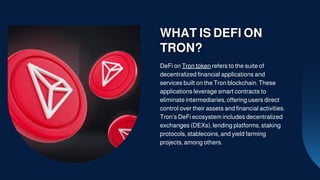
Tron (TRX) is known for its high transaction throughput and zero-fee model, making it a preferred choice for decentralized applications, especially in gaming and media. Tron's integration with stablecoins like USDT and its presence in the Asian market highlight its growing utility.
Real-World Use Case: Decentralized content sharing, payments, and DeFi
Adoption: Widely used in entertainment, stablecoin transfers, and dApps
Key Advantage: Zero to low transaction fees with high-speed execution
Tron's focus on content delivery and entertainment platforms makes it a compelling option for developers and users looking for a scalable and affordable blockchain solution.
Render (RNDR)

Render (RNDR) is a decentralized GPU rendering network that enables 3D, AR/VR, and AI workloads. By leveraging idle computing power from around the world, Render reduces the costs of rendering while democratizing access to high-end computing resources.
Real-World Use Case: Decentralized GPU rendering for 3D, AR/VR, and AI workloads
Adoption: Used by digital artists, developers, and content creators globally
Key Advantage: Low-cost rendering via distributed GPU power
Render's innovative approach to rendering highlights the potential of blockchain to solve real-world challenges in industries like film, gaming, and virtual reality.
Arbitrum (ARB)

Arbitrum (ARB) is an Ethereum Layer-2 scaling solution that uses optimistic rollups to reduce transaction fees and congestion. Its compatibility with Ethereum ensures that users can enjoy faster and cheaper transactions without compromising security.
Real-World Use Case: Ethereum Layer-2 scaling for DeFi, dApps, and smart contracts
Adoption: Widely adopted by DeFi protocols and Ethereum-based applications
Key Advantage: Low fees, high speed, and Ethereum compatibility
Arbitrum's role in supporting the Ethereum ecosystem makes it a critical component of the blockchain infrastructure, enabling more efficient and scalable applications.
Quant (QNT)

Quant (QNT) is a blockchain interoperability platform that enables businesses, banks, and government agencies to adopt blockchain technologies seamlessly. Its Overledger technology allows for multi-blockchain and traditional network interoperability, making it a vital link in the digital transformation of industries.
Real-World Use Case: Blockchain interoperability for enterprises and institutions
Adoption: Used in financial services, supply chain, and government tech
Key Advantage: Overledger enables seamless connection between multiple blockchains
Quant's focus on enterprise-grade solutions positions it as a key player in the future of blockchain, bridging the gap between traditional systems and emerging technologies.
VeChain (VET)

VeChain (VET) is a blockchain platform focused on supply chain management and logistics. By integrating IoT devices with blockchain technology, VeChain enables real-time tracking of products, improving transparency and reducing counterfeiting.
Real-World Use Case: Supply chain tracking, product authentication, and sustainability
Adoption: Used by industries like logistics, luxury goods, and food safety
Key Advantage: Integration of IoT with blockchain for real-time transparency
VeChain's partnerships with multinational companies highlight its real-world impact, making it a valuable asset for industries seeking to enhance their operations through blockchain.
Toncoin (TON)

Toncoin (TON) is a high-performance Layer-1 blockchain developed by Telegram. Its integration with Telegram's massive user base allows for seamless crypto transactions within the application, positioning it as a strong contender for mainstream adoption.
Real-World Use Case: Payments, decentralized apps, storage, and messaging integration
Adoption: Actively adopted within Telegram’s ecosystem and growing Web3 apps
Key Advantage: Native Telegram integration enables easy, borderless transactions
Toncoin's unique position within a popular social media platform gives it a significant advantage in reaching a broad audience, making it a promising altcoin for the future.
Conclusion
The top altcoins with real-world utility in 2025—Ethereum, Solana, Ripple, Tron, Render, Arbitrum, Quant, VeChain, and Toncoin—are redefining what blockchain can achieve. These coins are not just about speculation; they're about solving real problems and driving innovation across various industries. Their growing ecosystems, strategic partnerships, and practical applications make them strong contenders for long-term investment and technological advancement.
As the cryptocurrency market continues to evolve, the focus on real-world utility will only become more important. These altcoins are leading the charge, proving that blockchain can have a tangible impact on the world around us. Whether it's through faster transactions, decentralized storage, or supply chain transparency, these coins are shaping the future of decentralized technology.
